
Step Four is a written moral inventory broken into four parts: resentments, fears, sex conduct, and harms done to others. If you are ready to begin, the immediate action is simple: get a pen, set aside quiet time, and tell your sponsor you are starting the worksheets this week.
TL;DR:
- Complete each resentment, fear, sex conduct, and harms list in order to identify recurring patterns and honestly examine personal responsibility.
- Keep your inventory private by using handwritten notes or encrypted apps, especially when sensitive memories or legal risks are involved.
- Work through each column step-by-step: identify the person or situation, the cause, how it affected you, and your part, avoiding skipping or rushing.
- Prepare for the Step Five confession by scheduling sufficient time, clarifying what you will share, and carefully choosing a trusted person to speak with.
- Use resources like the official AA worksheets, support helplines, or professional help if unexpected distress or trauma surfaces during inventory work.
Table of Contents
- How to prepare before you start writing
- Filling out the resentment inventory, column by column
- Building a fear inventory from what surfaces
- Working the sex conduct and harms sections
- Getting ready to share your inventory in Step Five
- Crisis resources and privacy options while you write
- A note on starting Step Four
- Writing your inventory privately with the 12Steps app
- FAQ
- Sources
How to prepare before you start writing
Before you fill in a single column, read the Step Four material in Chapter 5 of the Big Book, where the four-part structure (resentments, fears, sex conduct, harms to others) is laid out along with the instruction to put it on paper rather than keep it in your head. Writing by hand slows you down enough to notice patterns that typing tends to skip over, and it also keeps the material off shared devices if privacy is a concern.
A few things to gather first:
- A notebook or several sheets of paper, plus a pen you actually like writing with.
- A quiet block of time, ideally the same time each day if you are working in short sessions.
- Your sponsor’s phone number and an early idea of when you might aim for Step Five.
- A copy of the official AA Step Four pamphlet for the worksheet format.
Some people finish in a concentrated weekend; others prefer 20 to 30 minutes a day over several weeks. Either pace works as long as you keep momentum and do not let weeks pass with the notebook closed.
Pro Tip: Call your sponsor before you start, not after you finish. Knowing someone is waiting to hear it keeps the writing honest.
If old memories surface that feel overwhelming rather than simply uncomfortable, pause and reach out. The 988 Lifeline is available for anyone in acute distress, inventory-related or not.
Filling out the resentment inventory, column by column
The resentment list is the first and usually the longest part of Step Four. The Big Book’s instructions and the Step Four pamphlet both describe a column format, and working it top to bottom keeps you from skipping to the parts that feel easier.
- Who or what you resent. Name the person, institution, or situation plainly, one per line.
- The cause. Write what happened in a sentence or two, without editorializing yet.
- How it affected you. Note what it threatened: self-esteem, security, ambitions, personal relationships, or pride.
- Your part. This is where most of the real work happens, and it comes last on purpose.
A short interpersonal example: you resent a former roommate who skipped out on rent. The cause is the unpaid money. The effect touched your financial security and your pride. Your part might include that you never put the agreement in writing and avoided the conversation for months out of conflict avoidance.
An institutional example: you resent a former employer over an unfair layoff. The cause is the job loss itself. The effect hit your financial security and self-esteem. Your part might be that you had stopped speaking up in meetings long before the layoff and let resentment build silently instead of addressing it.
Two notes on honesty here:
- Column four is not about excusing the other person’s behavior; it is about finding your own recurring patterns.
- If you truly cannot find your part in an entry, write that down too and bring it to your sponsor rather than forcing an answer.
Pro Tip: If a resentment entry makes your stomach tighten before you even write it, that is usually the one worth the most attention.
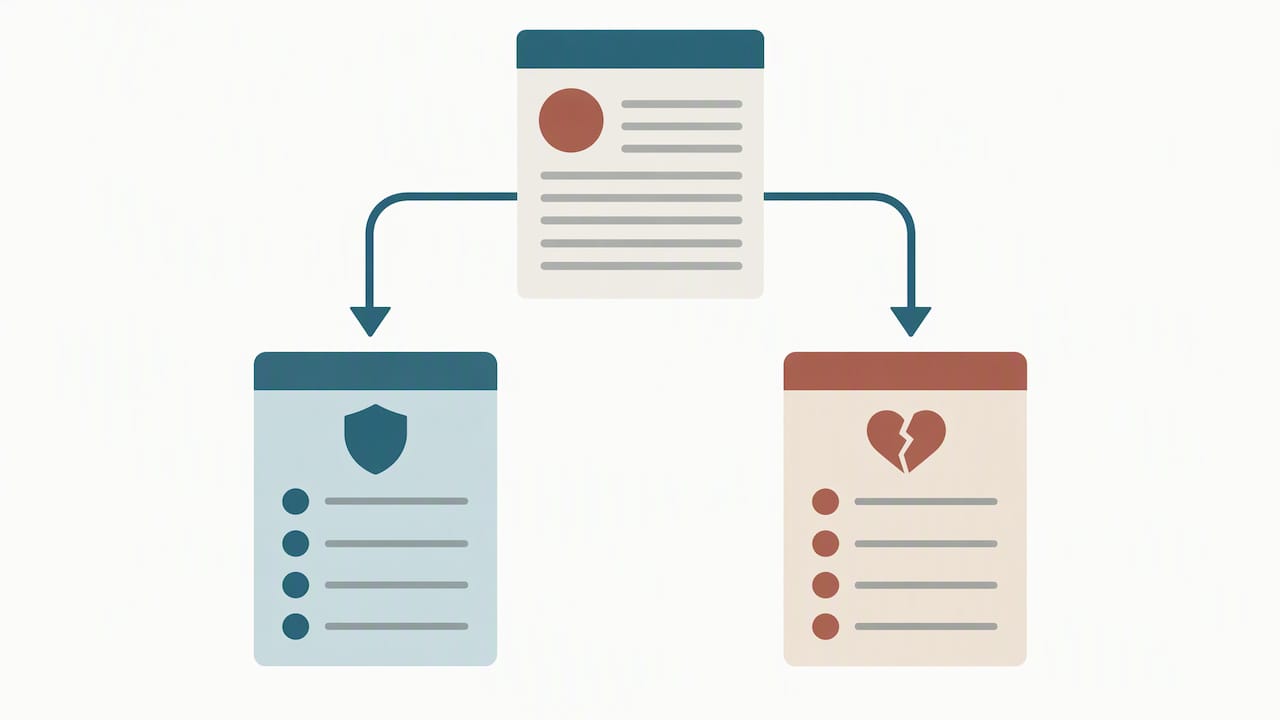
Many sponsors and workshop materials suggest keeping a second sheet nearby while you work. Each time a resentment reveals a fear, jot it there. Each time it reveals a person you harmed, jot that there too. Those two lists become your next two sections.
Building a fear inventory from what surfaces
Once your resentment list is drafted, pull every fear it mentioned or implied onto a separate page. Some will repeat across several resentments, and that repetition is the point: it shows you which fears actually run your decisions.
For each fear, ask three questions:
- What am I actually afraid will happen if this fear comes true?
- When do I first remember feeling this way?
- How has this fear shaped choices I have made, including ones that seemed unrelated at the time?
Common categories include financial fear (not having enough, losing a job), relational fear (abandonment, rejection), self-worth fear (being seen as a failure), and health fear (illness, aging, mortality). Most people find their fear list clusters around two or three of these rather than being evenly spread.
Pro Tip: Write the fear first in one blunt sentence, then answer the three questions underneath it. Burying the fear inside a paragraph makes it easier to minimize.
This list is not busywork. The character patterns you name here are what Steps Six and Seven ask you to become willing to have removed, so a clear fear inventory now makes that later work concrete instead of abstract.
Working the sex conduct and harms sections
The sex conduct inventory asks you to look honestly at your past conduct in relationships, without either confessing for effect or quietly skipping it. The goal is clarity about whom you hurt, whom you were unfair or inconsiderate to, and where your own selfishness or dishonesty caused damage, alongside where fear distorted your choices.
Useful prompts for this section:
- Whom did my conduct affect, and in what specific way?
- Was I selfish, dishonest, or inconsiderate, and which of those fits best?
- What would a reasonable, mature standard for this kind of relationship look like?
- What do I need to change going forward rather than simply regret?
The harms-done section is broader: it covers every person your behavior affected, not only romantic or sexual relationships. Friends, family, coworkers, and former employers can all belong on this list.
Grouping both lists makes them manageable. Some people organize by relationship (family, friends, work, romantic partners); others organize by type of harm (financial, emotional, physical). Either structure works as long as it lets you scan the full list without feeling buried.
Pro Tip: If an entry involves something that could carry legal exposure or safety risk for you or someone else, flag it clearly and bring it to your sponsor before you do anything else with it.
Not every item on this list leads to a direct amend right away. Some require a professional’s input first, particularly where legal consequences, custody matters, or another person’s safety are involved. Your sponsor’s judgment matters here, and so does a therapists when the situation calls for one.
Getting ready to share your inventory in Step Five
Step Five asks you to admit the exact nature of your wrongs to God, to yourself, and to another human being, usually your sponsor. The goal is not to read every word you wrote but to speak it out loud to someone who will not flinch or judge.
A practical structure for the meeting:
- Schedule enough time, typically two to four hours, without interruptions.
- Decide in advance what you will read directly from the page versus summarize.
- Agree on confidentiality before you start, even with a sponsor you trust completely.
- Build in a short check-in partway through if the material gets heavy.
- Close by naming which harms seem to need amends, setting up the work for Steps Six through Nine.
What you share in Step Five becomes the raw material for the rest of the steps, so treat the session as a planning conversation as much as a confession.
Crisis resources and privacy options while you write
Step Four work sometimes surfaces memories or emotions heavier than expected. The SAMHSA Find Help directory lists national helplines and local resources for addiction and mental health support if that happens. NIDA’s guidance on addiction treatment also recommends pairing psychosocial supports, including step work, with clinical treatment when significant mental health needs are present.
The 988 Lifeline is available around the clock for anyone in acute distress. Call or text 988 if memories from your inventory trigger a crisis rather than manageable discomfort.
For the writing itself, your options are simple:
- A paper notebook kept somewhere private, which many people prefer for its finality.
- An encrypted journaling app, useful if you share a household or worry about devices being seen.
- A combination of both, paper for the deepest material and an app for daily notes.
If what surfaces points to trauma beyond what a sponsor is equipped to help with, a licensed therapist is the right next step alongside, not instead of, your step work.
A note on starting Step Four
Most people put off Step Four longer than any other step, and the delay is almost always fear of what they will find, not the writing itself. The relief tends to come not from finishing perfectly but from finally putting the truth on paper instead of carrying it unwritten.
Step Four is not a one-time event. Step Ten asks you to keep taking personal inventory, so the habits you build here, honest columns, a willingness to find your own part, stay with you well past this step.
— James
Writing your inventory privately with the 12Steps app
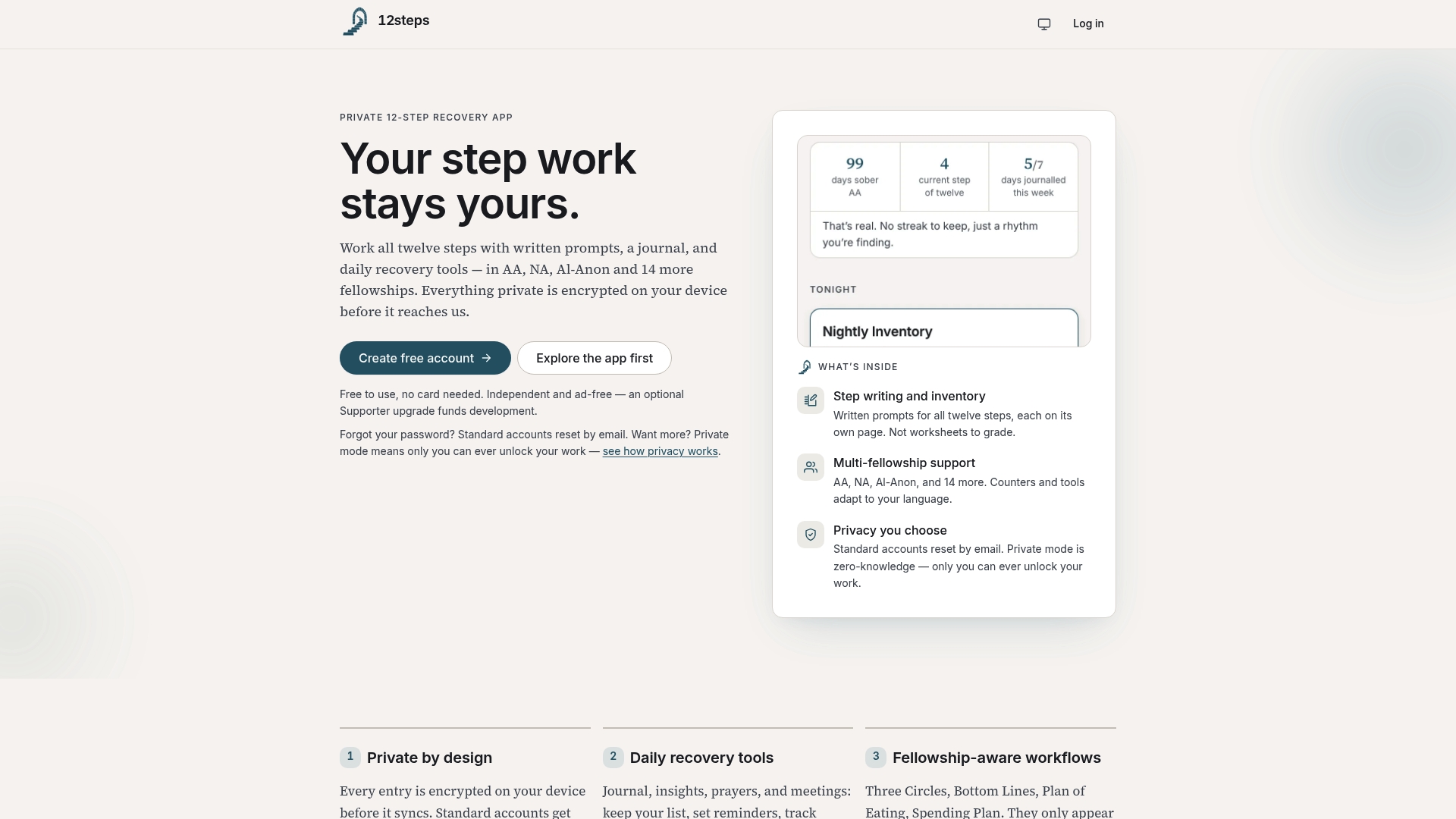
If you want your Fourth Step material to stay fully private, 12Steps encrypts entries on your device before anything syncs, so no one, including us, can read your inventory. That matters most for the resentment, fear, and sex conduct sections, where handwriting on paper left lying around is not always practical.
Inside the app you get:
- Journaling prompts that follow the same four-part structure described above.
- Meeting reminders so you do not lose momentum between sessions with your sponsor.
- Encrypted storage that keeps your columns readable only by you.
This fits best if privacy concerns have been part of why you have stalled on Step Four before. The free version covers the core journaling tools, and a Supporter upgrade is available for £12 per year for anyone who wants to help fund ongoing development.
Start your private inventory today at 12steps.
This article is general information, not a substitute for advice from a qualified doctor. Consult a qualified healthcare professional about your own circumstances before acting on anything here.
FAQ
Is there an AA Step 4 worksheet?
Yes, AA publishes an official Step Four pamphlet with column-based worksheets for resentments, fears, sex conduct, and harms done. Many sponsors also use workshop-style worksheets that follow the same four-part structure described in the Big Book.
What should I list in the Fourth Step list of resentments?
List every person, institution, or situation you resent, then fill in the cause, how it affected you, and finally your own part in each situation. The Big Book’s Step Four chapter recommends working through these columns top to bottom rather than jumping around.
How can Step 4 be simplified?
Break the inventory into its four natural parts, resentments, fears, sex conduct, and harms done, and work on one at a time rather than trying to capture everything at once. Short daily writing sessions, rather than one long sitting, tend to keep the process from feeling unmanageable.
How do I fill out a Step 4 worksheet?
Work each column in order: name the resentment or fear first, then its cause, then its effect on you, and only then your own part. Completing the columns top to bottom, as the Step Four pamphlet recommends, keeps the focus on honest self-examination rather than relitigating what others did.