A Step Four fear inventory is a short, columnar worksheet that lists what you fear, why you fear it, how it affects your life, and what part of self is involved. This article breaks down that worksheet column by column, offers categorized fear examples you can copy into your own Column 1, and recommends working the whole thing with a sponsor rather than alone.
TL;DR:
- Complete each column for every fear before moving to the next; list brief phrases first instead of analyzing them immediately.
- Use four columns to record each fear, its cause, its effect on your life, and the part of self involved, such as control or dishonesty.
- Work in 30 to 60 minute sessions and check in with your sponsor after each column, rather than tackling the inventory alone.
- Keep each entry factual and brief; save longer explanations for Step Five, and adapt sample fears to your own history rather than copying them.
- AA publishes no official worksheet; community created examples can suggest fears to list, but each entry should reflect your own experience.
Table of Contents
- Why the fear inventory matters in Step Four
- Column-by-column worksheet explained
- Common fear examples, organized by category
- Turning a listed fear into finished columns 2 to 4
- Practical notes on keeping the inventory functional
- A note on using these examples honestly
- How 12Steps supports private Step Four work
- FAQ
- Sources
Why the fear inventory matters in Step Four
The Big Book calls fear “an evil and corroding thread” running through the fabric of a life built on self will, and treats it as a root cause rather than a side effect. Step Four guidance from AA frames the fear section as one of four parts of a thorough Fourth Step, alongside resentments, sex conduct, and harms done to others. The point is not to catalog every anxious thought you have ever had. It is to find the specific fears that keep driving behavior you want to change, so you can eventually ask for them to be removed.
A working fear inventory does three things:
- Names the fear in plain language instead of a vague feeling of dread
- Traces the fear back to a cause you can actually identify
- Shows how that fear shaped a decision, a relationship, or a pattern you repeat
Finishing this section sets up Step Five, where you say the words out loud to another person, and it becomes a reference point for Step Ten later on.
Column-by-column worksheet explained
The standard worksheet runs four or five columns wide, and the completion rule matters as much as the content: finish Column 1 for every fear you can think of before you start Column 2, then finish Column 2 before Column 3, and so on. Step Four guidance from AA and the chapter “Into Action” in the Big Book both describe this column structure, and most printable fear-inventory worksheets reproduce it directly.
- Column 1: I am afraid of. List the fear as a short phrase. “Being alone,” “losing my job,” “my kids finding out,” not a paragraph.
- Column 2: Why I have this fear. State the belief or experience behind it. “Because my father left when I was eight,” “because I was fired once before.”
- Column 3: How this fear affects my life. Name the instinct or area it touches: self-esteem, security, relationships, ambitions. “I avoid conflict with my partner,” “I overwork to feel safe.”
- Column 4: What part of self was involved. Note the defect at play, like selfishness, dishonesty, or control, and that you are asking to have it removed.
Work in sessions of 30 to 60 minutes rather than one marathon sitting, since short, repeated sessions tend to keep momentum without burning you out, according to NA’s Step Four guidance. Check in with your sponsor after each column, not just at the end.
Pro Tip: Write Column 1 as a flat list first, even if it takes several sessions. Resist the pull to analyze a fear the moment you write it down.
Common fear examples, organized by category
AA does not publish an official Step Four worksheet, but widely circulated printable worksheets tend to seed Column 1 with a similar set of recurring fears. Here are categories and short phrases you can copy or adapt.
Relationships and abandonment: being left, being unloved, being replaced, being alone in old age, losing a friendship, being forgotten.
Security and finances: running out of money, losing my job, becoming homeless, not being able to retire, debt collectors, depending on others financially.
Intimacy and sex: being rejected, being inadequate, being judged for my past, losing attraction, emotional closeness, being vulnerable with a partner.
Competence and failure: failing publicly, being seen as stupid, losing a promotion, disappointing my family, starting over, not being good enough.
Exposure and being found out: my past being discovered, lying being exposed, people seeing who I really am, being judged for old mistakes.
Health and relapse: physical illness, losing control again, relapse itself, dying young, becoming a burden on my family.
Confrontation and authority: conflict with a boss, standing up to a parent, saying no, being punished, losing respect.
A generic item like “fear of failure” becomes useful only once you attach it to your own history: “fear of failing at this job the way I failed at the last one” gives you something to actually trace in Column 2.
One in four-Step Four sections commonly covers fear specifically, since the Fourth Step traditionally breaks into four parts: resentments, fears, sex conduct, and harms done, as described in Step Four guidance from AA. That structure is why a dedicated fear list earns its own worksheet rather than getting folded into resentments.
Turning a listed fear into finished columns 2 to 4
A short sample row makes the pattern clear. Fear: “being found out as a fraud at work.” Cause: “because I got promoted without feeling qualified.” Effect: “I overprepare for every meeting and avoid asking questions.” Part of self: “pride and dishonesty with myself about what I actually know.”
Use sentence starters to keep each column short and specific:
- Column 2 starter: “Because I believed…” or “Because I experienced…”
- Column 3 starter: “This fear makes me…” or “This fear shows up when…”
- Column 4 starter: “My part was…” or “The defect behind this is…”
Stay factual rather than narrative. A sentence or two per box is enough, and a sponsor reading it later should be able to follow the logic without wading through pages of backstory, a format NA’s guidance recommends specifically to avoid rumination.
Pro Tip: If a row is turning into a full paragraph, pull the extra detail out and save it for your Step Five conversation instead.
Practical notes on keeping the inventory functional
Keep entries factual and brief. Long emotional narratives tend to feed rumination rather than resolve it, and the inventory works best as a tool that feeds Step Five and daily Step Ten practice, not as a diary. If a category feels overwhelming, split it into smaller sessions and loop your sponsor in before shame builds up enough to make you quit.
A note on using these examples honestly
Concrete, columnar fear lists work better than vague journaling because they force you to name an actual cause and an actual effect, not just a feeling. Adapt every example in this piece to your own history rather than copying phrases that do not quite fit. These prompts are a starting structure, not a finished inventory, and the real work happens with a sponsor.
— James
How 12Steps supports private Step Four work
Working a fear inventory on paper is fine, but some people prefer somewhere private to draft and revise columns before sharing them with a sponsor. Our 12Steps app includes encrypted journaling built for exactly this kind of step work, along with fellowship-specific Step prompts and meeting reminders so the inventory does not become the only recovery task on your plate.
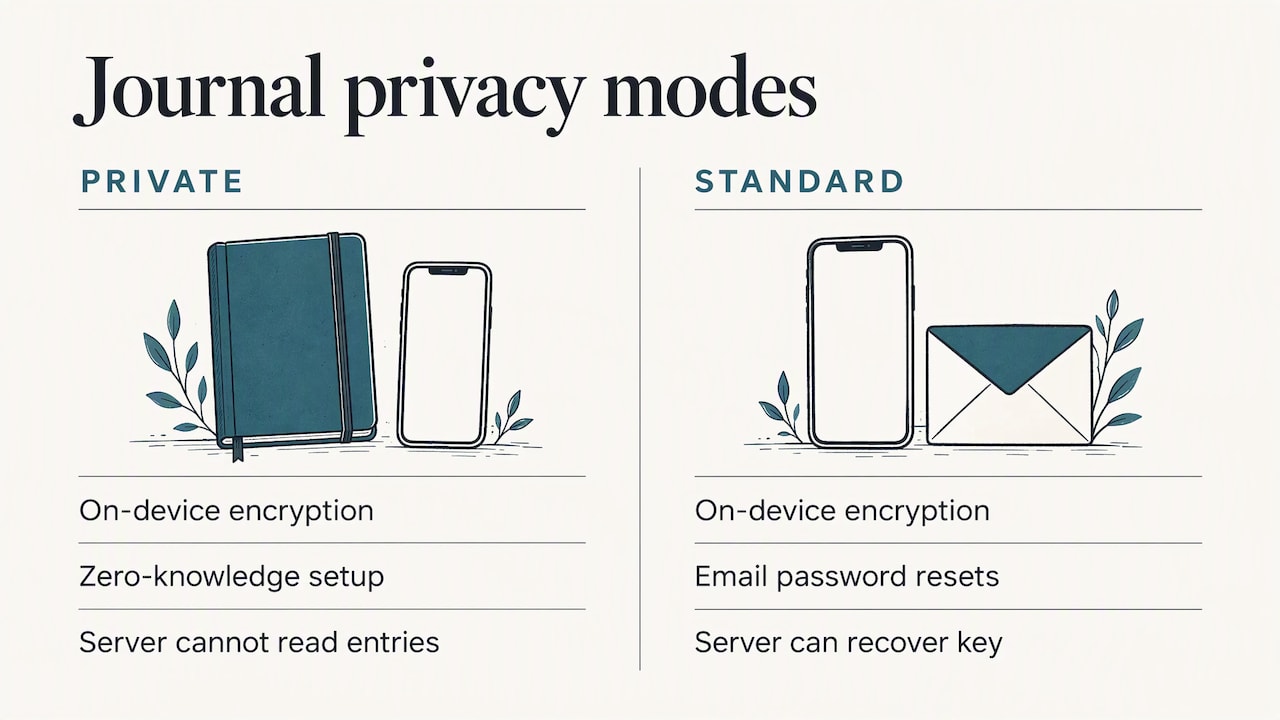
Private mode encrypts entries on your device and provides a zero-knowledge setup, so nobody on our end can read what you write. Standard mode also encrypts on the device, but because it supports email password resets, the server can recover the key if you lose access. If keeping your fear inventory fully private matters to you, Private mode is the one to choose.
Readers who want to support ongoing development can upgrade to the Supporter plan for £12 per year.
This article is general information, not a substitute for advice from a qualified doctor. Consult a qualified healthcare professional about your own circumstances before acting on anything here.
FAQ
What are some examples of common fears to list?
Common entries include fear of abandonment, fear of financial insecurity, fear of being found out, fear of failure, fear of intimacy, and fear of relapse. Start each one as a short phrase in Column 1, then trace its cause and effect in the columns that follow using the Step Four worksheet structure.
What are the five basic fears people describe?
There is no single fellowship-endorsed list of “five basic fears.” Many recovery worksheets instead group fears into recurring themes like security, relationships, competence, exposure, and health, which you can use as category headings for your own Column 1.
Why do I feel afraid during Step Four work?
Fear often surfaces because the inventory asks you to name beliefs and defects you have avoided looking at directly, and AA’s Big Book describes this kind of fear as tied closely to self will and control. Working in short sessions and checking in with a sponsor between columns tends to keep the process manageable.
Can you give an example of a mental or psychological fear?
A mental fear is one tied to identity or self-worth rather than a physical threat, such as “fear of being seen as a fraud” or “fear of not being good enough to keep this job.” These fit the same four-column format: name it, trace its cause, note its effect, and identify the part of self behind it.
Is there an official AA fear inventory worksheet?
No. AA publishes no single official Step Four worksheet, though its literature describes the column method in detail. Community-created printable worksheets are widely used adaptations of that same structure.