A lapse is usually a brief, single return to use; a relapse is a sustained return to previous patterns of compulsive use. Definitions vary across clinical research, but the practical difference that matters most is how you respond once it happens. Catching the shift early changes what comes next.
TL;DR:
- Research definitions vary widely: one review found that 32% of studies offered no formal definition, so track frequency, duration, and amount rather than relying on labels.
- Emotional and mental warning signs can emerge weeks before use, including isolation, poor sleep, skipped support, bargaining, or revisiting people and places tied to use.
- After any use, avoid being alone, assess overdose risk, and contact a sponsor, therapist, or prescriber that day rather than waiting.
- After opioid abstinence, tolerance falls, and returning to a former dose can cause a potentially fatal overdose, even after one use.
- Near daily use, withdrawal symptoms, or inability to stop are reasons to contact a treatment provider about medication or a higher level of care.
Table of Contents
- Defining Lapse and Relapse: What the Research Actually Says
- The Stages of Relapse: Emotional, Mental, and Physical Warning Signs
- What to Do Right After a Lapse or a Relapse
- What the Evidence Shows, and the Myths That Get in the Way
- How Private Recovery Tools Can Support Early Intervention
- Guilt, Shame, and the Emotional Weight of a Slip
- Lapse Triggers vs Relapse Triggers: Spotting the Difference
- Why AA, NA, and Similar Support Networks Matter Here
- Lapse and Relapse Look Different Across Substances
- Building a Recovery Plan That Reduces Relapse Risk
- Recovery Is Not a Straight Line
- FAQ
- Sources
Defining Lapse and Relapse: What the Research Actually Says
Clinicians and researchers don’t fully agree on where a lapse ends and a relapse begins, and that inconsistency matters for how you understand your own experience. Broadly, a lapse is treated as the first or a one-time return to use after a period of abstinence, while relapse describes a return to regular or prolonged compulsive use. A systematic review found that studies measure relapse in wildly different ways, by time, frequency, or amount of substance used, and that 32% of the studies reviewed offered no formal definition at all.
That gap in the research isn’t just academic. It means no single authority can tell you exactly when a slip “counts” as a relapse, so the label matters less than the pattern you notice in yourself.
A few practical ways to describe what happened without adding shame:
- “I used once and I’m working to get back on track.”
- “I’ve slipped back into regular use and need more support.”
- “I’m noticing warning signs before any use has happened.”
Naming your situation accurately, rather than jumping to “I relapsed” or “I’m a failure,” keeps the focus on the next right action.
The Stages of Relapse: Emotional, Mental, and Physical Warning Signs
Relapse rarely starts with the act of using. Clinical relapse-prevention models describe it as a staged process that often begins weeks before any substance is involved, which means there’s usually a window to intervene.
- Emotional relapse: You’re not thinking about using, but your self-care is slipping. Isolation, poor sleep, bottled-up feelings, and skipping meetings or meals are common signs, often summarized by the HALT check: are you hungry, angry, lonely, or tired?
- Mental relapse: An internal tug-of-war starts. You might glamorize past use, minimize consequences, bargain (“just one won’t hurt”), or quietly start planning an opportunity to use.
- Physical relapse: Use actually occurs. Without intervention, a single use (a lapse) can escalate quickly into a sustained return to old patterns.
Watch for specific behaviors: canceling plans with sober friends, revisiting old contacts or places tied to use, or rehearsing justifications in your head. These are mental-relapse markers, not just stress.
Pro Tip: When you notice emotional relapse signs, treat them as the time to act, not the time to wait and see if they pass on their own.
What to Do Right After a Lapse or a Relapse
Safety comes first. If use has already happened, don’t use alone, assess your risk of overdose, and know that tolerance drops fast during abstinence, which raises overdose risk after any return to use. Keep the 988 crisis line (US) and Samaritans at 116 123 (UK and Ireland) saved in your phone, and call emergency services if there’s any doubt about physical safety.
After a single lapse, practical next steps include:
- Contact your sponsor, therapist, or prescriber the same day, not after a week of silence.
- Use the coping tools already in your plan: journaling what led up to it, resetting meeting reminders, or revisiting your trigger list.
- Review what specifically preceded the use, without turning the review into a self-punishment session.
A return to regular or frequent use is a signal to escalate care, not just lean on existing coping tools. Contact a treatment provider if you notice near-daily use returning, withdrawal symptoms, or an inability to stop despite trying; this may be the point to discuss medication-assisted options or a higher level of care, such as inpatient or intensive outpatient treatment.
What the Evidence Shows, and the Myths That Get in the Way
The research is clear on one thing: there’s no consensus definition of relapse. The same systematic review cited earlier found definitions vary so much by measure, time, frequency, and amount that comparing studies, let alone comparing your experience to someone else’s, is often misleading.
That inconsistency has a real downside: it feeds the myth that any use at all means total failure. Psychologists call this the abstinence-violation effect, where labeling a lapse as proof you’ve failed can actually increase the odds of a full relapse, because shame tends to push people away from support rather than toward it.
A lapse is clinical information, not a verdict. Treating it as data to act on, rather than evidence of failure, keeps the door to recovery open.
Evidence-aligned prevention still centers on the basics: therapy such as CBT, medication where appropriate, ongoing monitoring, and social support consistently show up as the tools that help people respond to warning signs before they escalate.
How Private Recovery Tools Can Support Early Intervention
Tracking your own emotional and mental warning signs is easier with a consistent routine. Private journaling lets you notice patterns, like recurring HALT states or specific triggers, before they turn into a lapse. Daily intentions prompts and meeting reminders help rebuild the structure that often slips first during emotional relapse, and a meeting search feature makes it easier to find support when you’re away from your usual routine.
These tools work alongside clinical care; they don’t replace a therapist, sponsor, or prescriber when medical treatment is needed. For anyone who wants additional features on top of the free basics, the Supporter plan is available for an annual fee.
Guilt, Shame, and the Emotional Weight of a Slip
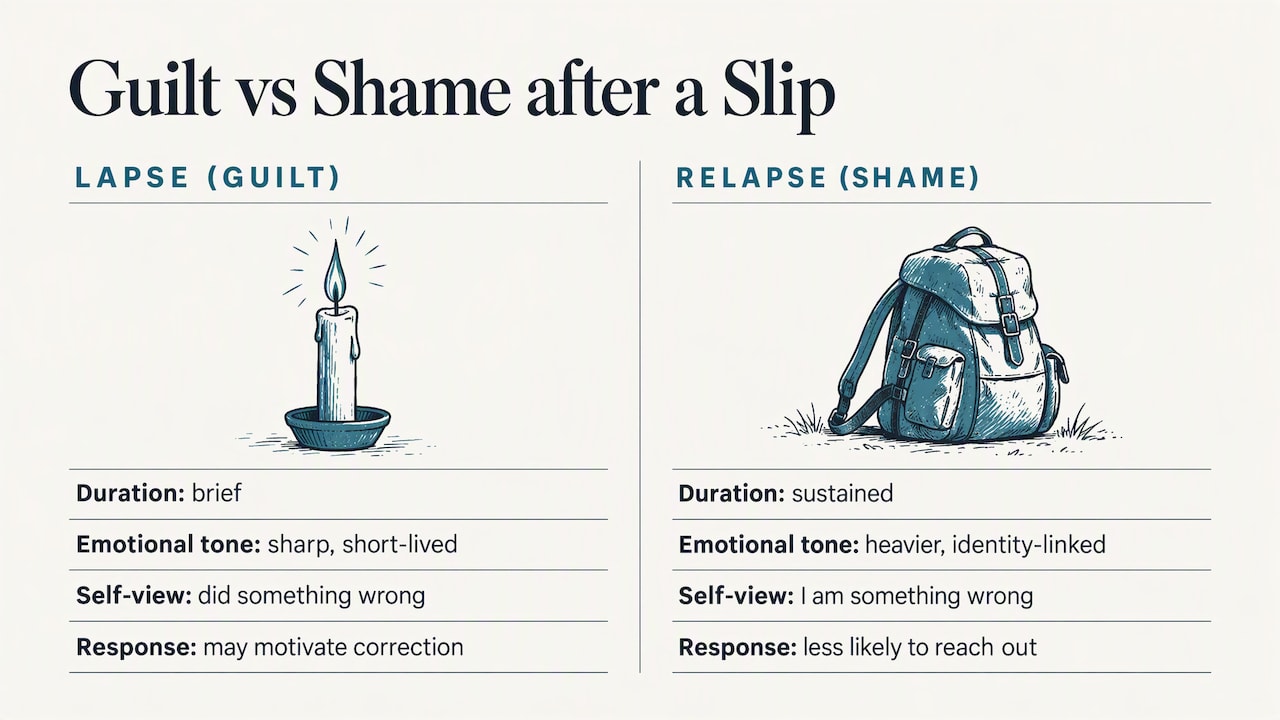
A lapse and a relapse don’t just differ in duration, they tend to carry different emotional loads. A single, brief lapse often brings sharp but short-lived guilt: a feeling of “I made a mistake” that can motivate a quick course correction if it isn’t buried in secrecy.
A sustained relapse tends to bring something heavier: shame, which attaches to identity rather than behavior. Guilt says “I did something wrong.” Shame says “I am something wrong,” and that shift makes people less likely to reach out, not more. The abstinence-violation effect mentioned earlier thrives on this exact dynamic, turning a single use into a spiral because the person assumes the damage is already done.
Recognizing which feeling you’re sitting with matters. If it’s guilt about one incident, a direct conversation with your sponsor or clinician usually resolves it fast. If it’s shame about a longer pattern, it often takes more deliberate work, sometimes with a therapist, to separate your sense of self-worth from the behavior you’re trying to change. Neither feeling is a sign you’re beyond help; both are signals pointing toward the same next step, which is talking to someone before isolation sets in.
Lapse Triggers vs Relapse Triggers: Spotting the Difference
The things that lead to a first slip often look different from what sustains a longer relapse. A lapse is frequently tied to a specific, identifiable moment: a stressful phone call, an old friend showing up with substances, a holiday where alcohol is everywhere, or a sudden wave of grief. These triggers tend to be situational and acute.
Sustained relapse usually involves accumulated triggers that build over time: chronic stress, untreated mental health symptoms, a gradual drift away from meetings or support contacts, or a slow return to old routines and relationships tied to past use. Where a lapse trigger might be “I ran into my old dealer at a gas station,” a relapse pattern might look like “I stopped going to meetings three months ago and started isolating again.”
Knowing which type of trigger you’re facing changes your response. A situational lapse trigger often calls for an immediate, specific coping tool: leaving the situation, calling a sponsor, or using a grounding technique in the moment. A relapse-level pattern calls for a bigger look at your routine: are meetings back on the calendar, is therapy consistent, has self-care quietly disappeared? Tracking triggers as they happen, rather than trying to recall them after the fact, makes this distinction much easier to catch in real time.
Why AA, NA, and Similar Support Networks Matter Here
Fellowship-based support works differently for a lapse than it does for a full relapse, but it plays a role in both. After a single slip, showing up to a meeting and being honest about it often defuses shame before it builds into something bigger; most members have been through exactly this and can speak to what helped them.
For someone whose use has become regular again, fellowships offer something more structural: a sponsor to lean on daily, step work to revisit, and a built-in community that doesn’t require explaining your history from scratch. People without a drinking problem can only observe open AA meetings, so closed meetings remain specifically for those working their own recovery.
Practice around medication varies by group and by individual, so if you’re on or considering medication-assisted treatment, it’s worth discussing directly with your doctor rather than assuming any one fellowship’s stance applies universally. The common thread across AA, NA, and similar programs isn’t a single rulebook, it’s consistent, judgment-light contact with people who understand the stakes.
Lapse and Relapse Look Different Across Substances
The lapse-versus-relapse distinction holds up across addictions, but what’s at stake after a slip shifts depending on the substance. With alcohol, a single drink after a period of sobriety is often the clearest example of a lapse: contained, specific, and reversible with quick support. But for someone with a long history of heavy drinking, that same single drink can trigger compulsive drinking within days, collapsing the gap between lapse and relapse.
With opioids, the stakes around a lapse are different in a more immediate way. Tolerance drops during abstinence, so a return to a previous dose after even a few weeks off can cause a life-threatening overdose, regardless of whether the use was a one-time lapse or part of a longer pattern. This is part of why NIDA frames addiction as involving long-lasting changes in brain circuitry, with stress and reduced tolerance both raising relapse and overdose risk after abstinence.
The practical takeaway: a lapse with any opioid carries an urgent safety component that a lapse with alcohol may not have to the same degree, even though both deserve a fast, honest response.
Building a Recovery Plan That Reduces Relapse Risk
A relapse-prevention plan isn’t a document you write once and forget. It works best as a living reference you actually use when emotional or mental warning signs show up, not something buried in a drawer.
A solid plan typically includes your personal trigger list, the specific coping tools you’ll use for each one, a short list of people to call (sponsor, therapist, a trusted friend), and a clear note on what “early warning signs” look like for you specifically. Writing these down ahead of time matters because in the moment, during a mental-relapse stage, your judgment is already compromised by cravings or bargaining.
Reviewing the plan regularly, not just after a slip, helps you catch pattern shifts before they turn into a lapse. Some people build this into a weekly check-in with a sponsor or therapist; others track it through daily journaling. Either way, a plan that’s specific to your own triggers and history consistently outperforms generic advice, because it accounts for what actually puts you at risk.
Recovery Is Not a Straight Line
A lapse doesn’t erase the progress you’ve made, but it is information you need to act on, not a setback to hide. The same rules apply whether you’re facing a single slip or working through a longer relapse: change what isn’t working in your routine, be honest with the people supporting you, ask for help before the situation escalates, and keep practicing basic self-care even when it feels unnecessary. None of this requires perfection, just a willingness to respond quickly.
— James
This article is general information, not a substitute for advice from a qualified doctor. Consult a qualified healthcare professional about your own circumstances before acting on anything here.
FAQ
What are the three types of relapse?
Clinical models typically describe relapse in three stages: emotional (poor self-care, isolation), mental (cravings, bargaining, planning to use), and physical (actual use). Recognizing the emotional and mental stages early gives you a chance to intervene before physical relapse happens.
What is a mental lapse?
A mental lapse generally refers to the mental-relapse stage, where cravings intensify and you begin glamorizing past use or quietly planning an opportunity to use, even though no substance use has occurred yet. It’s considered a warning sign that calls for immediate coping action, not evidence that use is inevitable.
What is the new term for relapse?
There isn’t one standardized replacement term; clinicians and researchers still use “relapse” and “lapse” with varying definitions across studies. Some practitioners prefer describing specific behaviors (frequency, amount, duration of use) instead of relying on a single label, since a systematic review found definitions vary widely across the research.
What is the difference between relapse and withdrawal?
Relapse is a return to substance use after a period of abstinence, while withdrawal refers to the physical and psychological symptoms that occur when a substance leaves your system after dependence has developed. Withdrawal can happen whether or not a relapse follows, and severe withdrawal sometimes requires medical supervision.