Yes, secular versions of the Twelve Steps exist and plenty of people use them for non-religious recovery work. AA’s own Third Tradition keeps membership open to anyone who wants to stop drinking, regardless of belief, and secular meetings have grown around that principle. You can attend secular meetings, use reworded step texts, or do private step work with a tool like 12Steps, talking to a doctor whenever medication or clinical care is part of your plan.
TL;DR:
- No official secular Steps exist; groups adapt religious wording while retaining the structure, so ask whether a meeting’s language fits your beliefs.
- Open meetings welcome observers, while closed meetings are limited to people who identify as having a drinking or drug problem; confidentiality norms apply.
- Groups differ in their approach to medication, so ask before attending and consult your doctor rather than relying on a meeting or app for care.
- A small 2023 pilot found over 90% of participants reported positive substance use outcomes, but it studied SMART Recovery services, not 12 step meetings.
Table of Contents
- What “secular 12-step” means and how it differs from traditional wording
- Common secular adaptations and example step wordings
- How secular meetings run: formats, etiquette, and what to expect
- Evidence and authoritative positions on secular and mutual-help recovery
- How to choose a secular support approach: checklist and questions to ask
- Why secular options matter and the value of privacy in recovery
- How 12Steps supports secular step work at home
- FAQ
- Sources
What “secular 12-step” means and how it differs from traditional wording
A secular 12-step approach keeps the structure of the original Twelve Steps but swaps religious language for humanist, psychological, or practical phrasing. The idea isn’t new: AA’s Third Tradition states that the only requirement for membership is a desire to stop drinking, which AA’s own guidance confirms was always meant to leave room for different beliefs, including no belief at all.
In practice, this means a step that once referenced turning your will over to “God, as we understood Him” might instead point to personal resources, trusted relationships, or a support community. Common substitutions include:
- “Higher Power” becomes “personal values,” “community,” or “something greater than ego.”
- “God” becomes “social support,” “the group,” or “life as I want to live it.”
- Prayer-focused language becomes reflection, journaling, or intention-setting.
No two secular groups phrase things identically. Some meetings lightly edit a few words; others run a fully reworked curriculum built around self-reliance and mutual support. Views on medication and clinical treatment also vary by group, so if you’re on a prescribed treatment plan, it’s worth asking how a specific meeting handles that conversation and checking in with your doctor rather than assuming a blanket policy.
Common secular adaptations and example step wordings
No official secular Steps exist. Groups and independent authors have written their own versions over the years, usually drawing on secular AA meeting materials, independent discussion guides, and member-written adaptations rather than any single authorized source. Here’s a compact example of how the first few steps often get reworded:
- Step One: Admit that your use of alcohol or drugs has become unmanageable and is causing real harm.
- Step Two: Recognize that support, whether from people, routines, or practices, can help restore balance.
- Step Three: Decide to rely on that support system and commit to a course of action.
Later steps tend to follow the same logic. Step Four’s moral inventory becomes a structured self-assessment of behavior patterns. Step Five’s confession becomes sharing that inventory with someone you trust. Steps Eight and Nine, the amends steps, usually stay close to the original: naming people you’ve harmed and making repairs where it’s safe and appropriate to do so. Daily practice, often framed in the original steps as prayer and meditation, becomes journaling, check-ins, or other reflection habits that don’t require a specific belief system.
The variation is the point. Secular groups tend to treat the steps as a flexible framework rather than a fixed script, and most encourage members to find language that actually resonates instead of reciting words that feel hollow. If a specific phrase doesn’t work for you, most secular meetings expect you to adapt it, not abandon the structure altogether.
How secular meetings run: formats, etiquette, and what to expect
Secular meetings follow the same general formats you’d find across AA: speaker meetings, discussion meetings, step-study sessions, and beginner-focused groups, as described in AA’s own literature on group structure. The difference is in tone and language rather than structure. A typical secular meeting might open with a non-religious reading, move into a step-focused discussion, and close with a moment of quiet reflection instead of a group prayer.
A few things to expect and keep in mind:
- Meetings are usually either open (anyone can attend, including people simply observing) or closed (for those who identify as having a drinking or drug problem).
- Anonymity and confidentiality norms carry over from traditional meetings: what’s said in the room stays in the room.
- If you don’t have a drinking problem yourself, you can only sit in on open meetings, not closed ones.
Pro Tip: Before attending, check a meeting’s listing for terms like “secular,” “agnostic,” or “freethinker,” and don’t hesitate to email the contact listed to ask how the group handles topics like medication or faith-based language.
Evidence and authoritative positions on secular and mutual-help recovery
Research on non-traditional mutual-help approaches is still limited, but what exists is encouraging. A 2023 pilot study on integrating SMART Recovery into addiction services found that over 90% of participants reported positive substance-use outcomes, and at least 70% reported improvements in physical health, personal responsibilities, and mental health. That’s a small pilot, not a definitive trial, so treat it as a promising signal rather than a verdict on any single method.
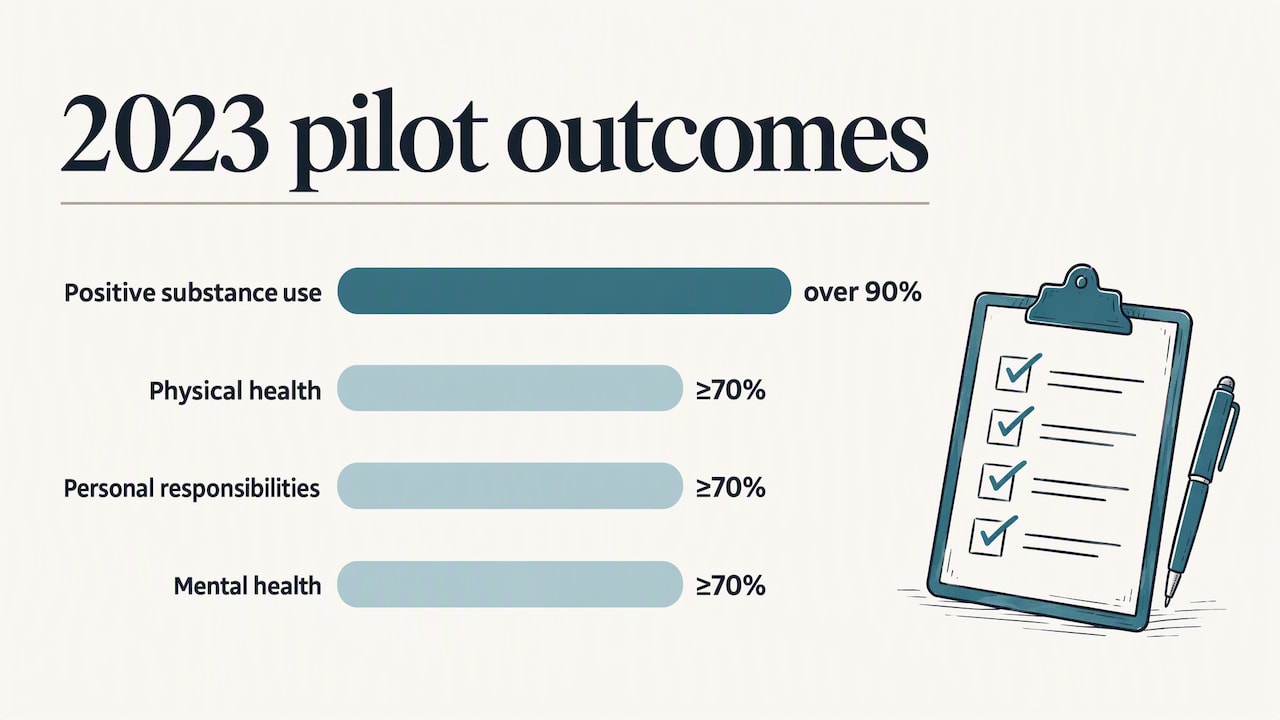
It’s worth being precise about what this evidence does and doesn’t cover: that study looked at a structured addiction-service program, not AA or NA meetings specifically, so it shouldn’t be read as proof of outcomes inside a 12-step room.
On the fellowship side, AA’s own position has been consistent:
The only requirement for membership is a desire to stop drinking.
That line, repeated across AA’s literature, is the foundation secular AA groups point to when explaining why agnostic and atheist members belong just as much as anyone else. Practice still varies meeting to meeting, which is why it’s worth sitting in on a few before settling on one.
For anyone doing step work privately, apps like 12Steps offer encrypted journaling and fellowship-specific prompts built for this kind of reflection. In Private mode, entries are encrypted on the device and the app provider holds no key to read them. Standard mode adds email password resets, which means the server can recover the key if you lose access. If medication-assisted treatment is part of your recovery, discuss it with your doctor rather than relying on any app or meeting format for guidance.
How to choose a secular support approach: checklist and questions to ask
Finding the right fit takes some trial and error. A short checklist helps narrow things down faster:
- Does the group’s language match what you need, secular, spiritual-but-flexible, or something in between?
- How does the group talk about medication and clinical treatment, and does that match your own situation?
- How often does the group meet, and is that frequency realistic for you?
- Does the room feel like peer support, or does it feel like pressure to conform?
- Is the meeting accessible, whether that means location, timing, or an online option?
- If you’re using an app or journal alongside meetings, what are its actual privacy practices?
When you visit a new group for the first time, a few questions can save you time:
- Ask whether the group identifies as secular, agnostic-friendly, or traditional with flexible language.
- Ask how newcomers are welcomed and whether sponsorship is expected or optional.
- Ask what the group’s stance is on members taking prescribed medication.
Red flags are worth taking seriously: pressure to adopt specific language against your wishes, shaming around beliefs or treatment choices, or casual talk that breaks confidentiality. A good group respects your autonomy over both your recovery and your personal reflection work. If it doesn’t, it’s reasonable to look elsewhere.
Why secular options matter and the value of privacy in recovery
Secular framing keeps some people in the room who would otherwise walk away from language that doesn’t fit their worldview. That matters because staying engaged, in any format, tends to matter more than which words are on the page. Privacy matters too: having a space to write honestly, without wondering who might read it later, makes the hardest step work easier to actually do.
— James
How 12Steps supports secular step work at home
We built 12Steps around the idea that your step work should stay yours, whether you’re working a traditional or secular version of the Steps. 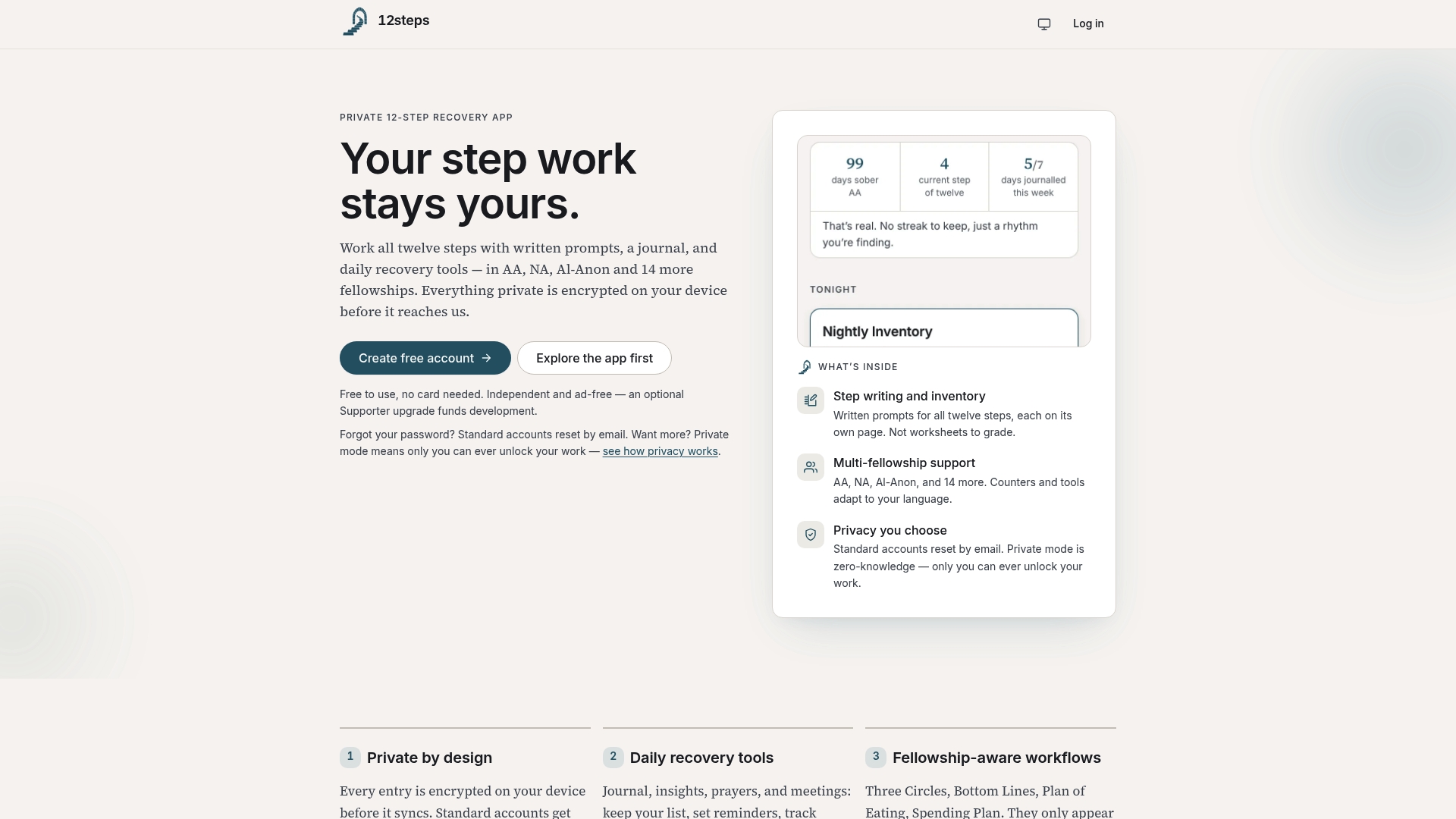
Our app gives you:
- Encrypted journaling for step work, available in Private or Standard mode.
- Fellowship-specific prompts that adapt to AA, NA, or other programs you’re working.
- Meeting reminders and a searchable meeting directory, including listings in cities like Plymouth, Reading, and Glasgow.
- Import tools for bringing over existing notes from other apps.
| Mode | Key access |
|---|---|
| Private | Encrypted on device; we hold no key and can’t read entries |
| Standard | Encrypted on device; server can recover the key via email password reset |
Start with the free version of the 12Steps app, and if you want extra features and want to help fund ongoing development, the £12/year Supporter plan is available at 12steps.life/settings/supporter.
This article is general information, not a substitute for advice from a qualified doctor. Consult a qualified healthcare professional about your own circumstances before acting on anything here.
FAQ
Is there a version of AA that is not religious?
Yes. Secular AA meetings exist worldwide and follow AA’s Third Tradition, which requires only a desire to stop drinking, not any particular belief. These meetings typically reword references to a Higher Power into more humanist or practical language while keeping the same step structure.
What are the alternative 12 Steps?
There’s no single official alternative version. Secular AA groups, independent authors, and recovery communities have published their own reworded steps that replace religious language with concepts like personal resources, social support, and self-directed reflection, and groups often adapt the wording further to fit their members.
What is a secular meeting in AA?
A secular meeting is an AA-affiliated or independent meeting that uses non-religious language throughout its readings, discussions, and step work, while keeping the traditional meeting formats described in AA’s group literature. Views on topics like medication vary by group, so it’s worth asking directly if that matters to you.
Do secular 12-step programs actually work?
Research on secular and alternative mutual-help approaches is still developing, but early results are encouraging: a 2023 pilot study on a non-traditional program found over 90% of participants reported positive substance-use outcomes. Engagement, through attendance, support, and consistent practice, tends to matter more than the exact wording a group uses.
What if I need help right now?
If you’re in crisis, call 988 in the US or Samaritans at 116 123 in the UK and Ireland. Both lines offer confidential, immediate support regardless of which recovery approach you use.