A spot check inventory is a brief, on-the-spot pause you take when you notice a strong feeling taking over: stop, name what you’re feeling, ask “What’s really going on?”, and choose one constructive action. It should take under a minute and you’ll repeat it often, sometimes several times a day. There’s no need to analyze everything right away.
TL;DR:
- Resentment, anxiety, irritability, cravings, physical tension, or a heated conflict can signal a trigger; pause even when the reaction seems minor.
- Name the feeling, ask what is happening and what your part may be, choose one constructive action, and jot a few words within thirty seconds.
- Save detailed analysis and smaller irritations for the nightly inventory, where brief daytime notes can reveal recurring patterns without relying on memory.
- Contact your sponsor immediately when relapse feels possible or conflict is escalating; if your actions hurt someone, seek guidance on a prompt, direct acknowledgment.
Table of Contents
- What a spot check inventory is and why Step Ten recommends it
- When to run a spot check: signs you’ve hit a trigger moment
- A simple 4-step spot check script you can practice now
- Recording spot checks safely: paper, voice, or app
- After the spot check: what to do with what you found
- A quick example: catching a resentment before it grows
- What actually matters in a spot check, and what doesn’t
- Using 12Steps to capture spot checks and build the nightly habit
- FAQ
- Sources
- Authoritative AA materials and helplines
What a spot check inventory is and why Step Ten recommends it
Step Ten material describes the spot check as a tool for quieting stormy emotions and holding onto emotional balance while life keeps throwing things at you, according to AA’s Step Ten guidance. The idea isn’t new analysis every time something stings. It’s catching the emotional hangover, resentment, fear, self-pity, before it runs the show.
The Big Book’s chapter on personal inventory ties daily and spot inventories to clearing out exactly these hangovers, recommending a constructive look back rather than picking apart the day for faults. A spot check works because it’s short and repeatable. It builds a small gap between the feeling and whatever you’d otherwise do about it, and that gap is where self-restraint lives. You’re not trying to solve the resentment on the spot. You’re trying to not act on it until you’ve thought for ten seconds.
When to run a spot check: signs you’ve hit a trigger moment
Some signals come from inside: a flash of resentment, a knot of anxiety, impatience with someone who’s probably done nothing wrong, or a craving that shows up out of nowhere. Others come from outside: an argument that’s heating up, someone trying to provoke you, a crowded room, a stressful phone call.
The point isn’t to catch every single one. It’s to notice the pattern often enough that pausing becomes automatic.
- Internal cues: resentment, anxiety, irritability, impatience, or craving.
- External cues: conflict, criticism, provocation, or a socially stressful situation.
- Physical cues: a tight jaw, a racing heart, or the urge to say something sharp.
Any one of these is reason enough to pause for a spot check, even if it turns out to be nothing.
A simple 4-step spot check script you can practice now
This script is short on purpose. You’re aiming for restraint, not analysis, since recovery guidance from Hazelden Betty Ford notes that a spot check’s main value is the gap it creates between the feeling and what you do next, not a perfect read of the situation.
- Pause and name the feeling. Say it plainly to yourself: “I’m angry,” “I’m anxious,” “I want a drink right now.”
- Ask the core question. “What’s really going on?” Then ask what your part in it is, even a small one.
- Pick one constructive action. Breathe, pray, step away from the room, postpone your reply, or simply jot a note instead of reacting.
- Record a brief note. A few words are enough so the issue doesn’t get lost and you can revisit it later.
Pro Tip: Keep the whole script under thirty seconds. If you’re still turning it over in your head five minutes later, you’ve shifted into analysis, which belongs in your nightly inventory, not the spot check.
Recording spot checks safely: paper, voice, or app
How you record matters less than whether you’ll actually use the method. A paper notebook is private and requires no battery, but it’s easy to lose or leave somewhere others can read it. A voice memo is fast but can be overheard or auto-synced to a cloud account you didn’t think about. An app built for recovery journaling adds structure and reminders, but only if it protects what you write.
Twelve-step practitioners generally recommend a short written log for recurring disturbances, logging the trigger, the emotion, your part, and the next action, since the Big Book’s approach to inventory favors a format you can look back on rather than relying on memory alone.
Whatever you choose, keep sensitive notes private by default and check with your sponsor before sharing anything specific. If you use a 12-step recovery app with privacy modes, one mode may keep entries encrypted so only you hold the key, while another mode may allow encrypted entries with email password reset options that enable server recovery of the key.
- Paper notebook: private, no battery needed, easy to misplace.
- Voice memo: fast, but can sync to places you forgot about.
- Recovery app: structured and searchable, protection depends on the privacy mode you pick.
After the spot check: what to do with what you found
Some things need attention now. If you’re close to picking up a drink or drug, or a conflict is escalating, call your sponsor right away rather than waiting for the end of the day. Most spot checks, though, can wait for your nightly review.
Deciding whether an amends is needed usually comes down to one question: did your part in it hurt someone? If yes, the next step is typically a direct, prompt acknowledgment rather than a drawn-out explanation. If you’re unsure, that’s exactly the kind of thing to bring to a sponsor rather than deciding alone.
- Call your sponsor immediately for anything touching on relapse risk or an active conflict.
- Save smaller resentments and irritations for your nightly inventory.
- Fold your spot-check notes into that nightly review so patterns become visible over days, not just moments.
Consolidating the day’s spot checks at night turns scattered notes into a pattern you can actually work with.
A quick example: catching a resentment before it grows
You’re in a meeting and someone cuts you off mid-sentence. The old reaction is to stew on it for the rest of the day. Instead: pause, name it (“I’m irritated, maybe a little hurt”), ask what’s really going on (you felt dismissed, and part of it is that you hadn’t finished your point clearly), pick an action (let it go for now, breathe), and jot three words in a note.
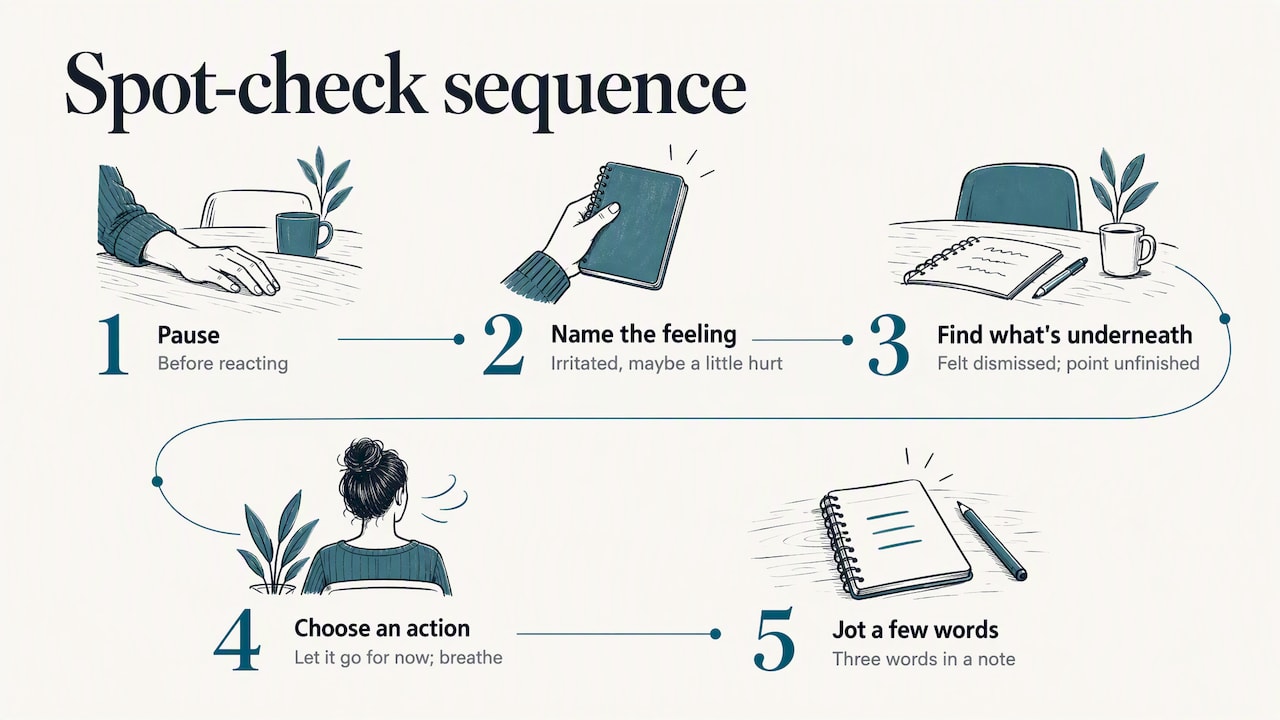
The common mistake here is over-analyzing in the moment or putting off the pause until later, by which point the reaction has already shaped your day. Doing it imperfectly, repeatedly, matters more than doing it perfectly once.
What actually matters in a spot check, and what doesn’t
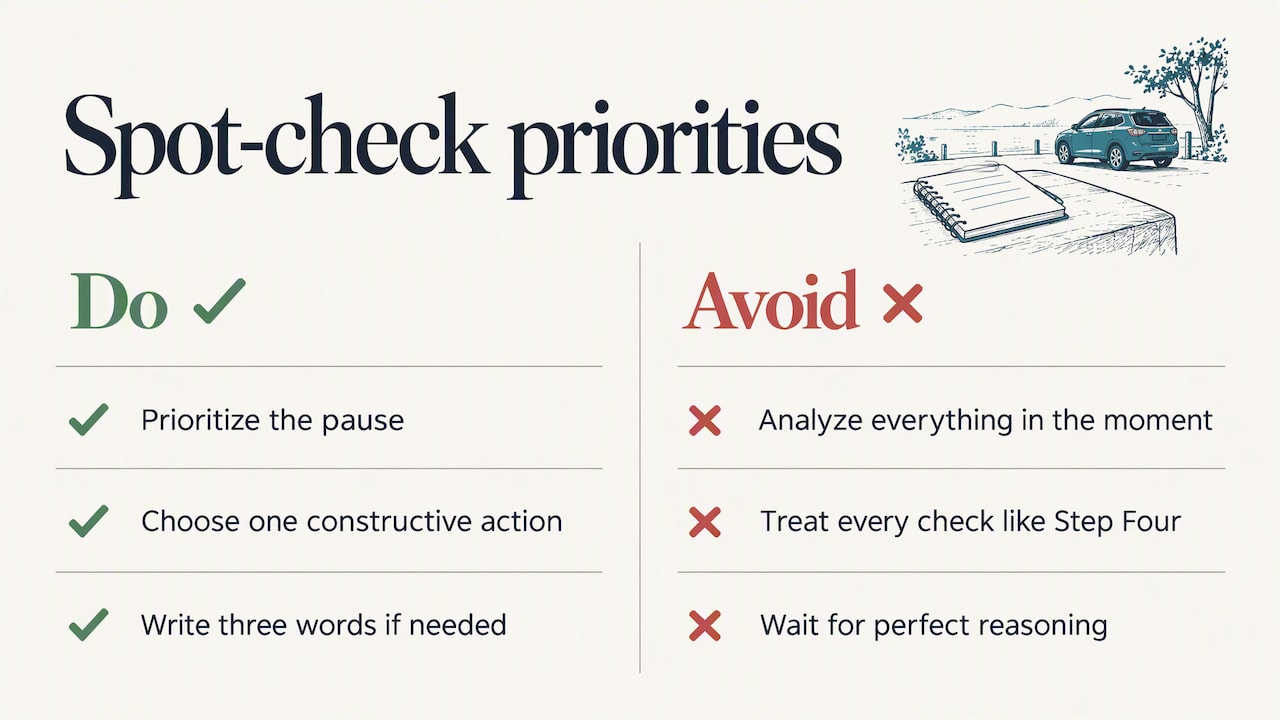
Most advice on personal inventory leans heavily on analysis: dig into the resentment, trace it back, understand it fully. That’s valuable work, but it belongs in the nightly review, not in the thirty seconds after someone cuts you off in traffic. The spot check’s job is narrower and, frankly, more useful day to day: create enough of a gap that you don’t act on the first wave of feeling.
Where I think the conventional framing falls short is in treating every spot check like a miniature Step Four. It isn’t. A spot check that takes five minutes has usually stopped being a spot check. If you walk away with one lesson, it’s this: prioritize the pause and the one constructive action over getting the analysis right. Write three words down if that’s all you’ve got time for. The nightly inventory is where the fuller picture comes together, and a stack of honest, half-formed notes from the day serves that review far better than a handful of perfectly reasoned ones you never got around to writing because the moment had already passed.
— James
Using 12Steps to capture spot checks and build the nightly habit
Writing a quick note in the moment only works if you trust where it’s going. Our app encrypts journal entries on your device, so you can jot a spot check during a tense moment without worrying about who else might see it later. Beyond journaling, some apps offer fellowship-specific prompts, meeting reminders, and daily intentions tools that help turn scattered spot checks into a consistent nightly habit.
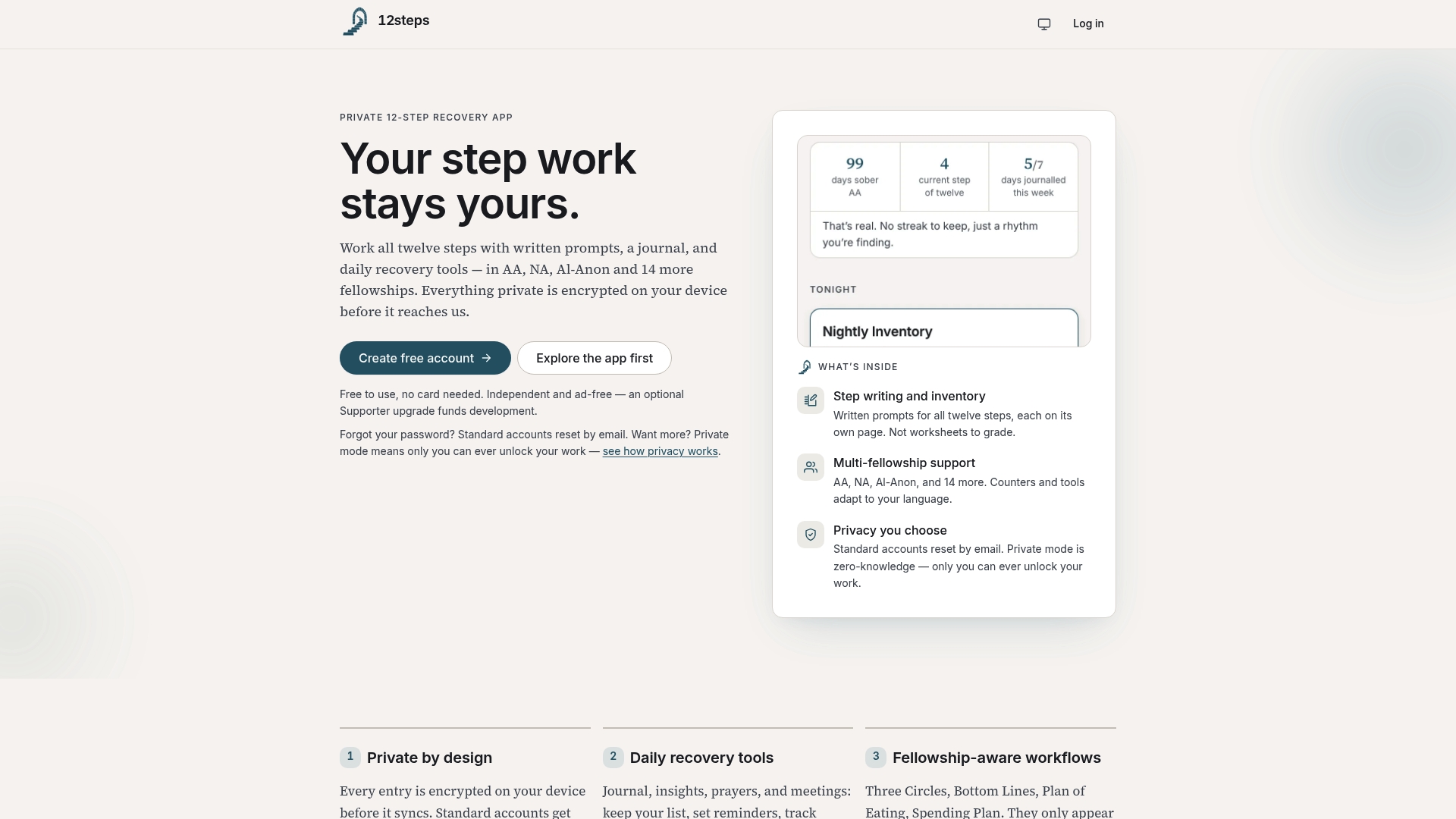
Users can typically choose a privacy level that fits them, with options such as zero-knowledge modes where only the user holds the encryption key, and other modes that allow email password resets and potential server recovery of the key.
- Encrypted journaling features for spot-check notes and nightly inventory.
- Fellowship-specific prompts and meeting reminders in some apps.
- Meeting search functions to help find support when needed.
Start with the free features, and if you want extra tools, consider the £12/year Supporter plan to help fund ongoing development.
This article is general information, not a substitute for advice from a qualified doctor. Consult a qualified healthcare professional about your own circumstances before acting on anything here.
FAQ
What are the only two sins in AA?
AA literature does not define an official list of “sins.” The closest recurring theme in Step Ten material centers on resentment and fear as the emotional states most likely to derail recovery, which is why spot checks focus on catching them early.
What is the 3-3-3 rule for addiction?
This is not an AA or Step Ten concept, and our sources do not define a standard “3-3-3 rule.” If you’ve seen it referenced elsewhere, treat it as an informal shorthand rather than an established recovery framework.
How do I do a Step Ten inventory?
A Step Ten inventory combines short spot checks during the day with a fuller nightly review, where you look back at resentments, fears, and your part in conflicts, per AA’s Step Ten guidance. Spot checks catch the moment; the nightly review connects the patterns.
What are the 5 C’s in AA?
AA’s core literature does not define a standard framework like the “5 C’s.” Formats and acronyms vary by group or sponsor since AA publishes no single official worksheet for Step work.
Sources
- Twelve Steps - Step Ten - (pp. 88-95)
- SAMHSA national helpline
- Hazelden Betty Ford Center article on Step 10
Authoritative AA materials and helplines
For primary reading, see AA’s Step Ten text and the Big Book chapter on personal inventory. For immediate crisis support, contact SAMHSA’s national helpline, 988 in the US, or Samaritans at 116 123 in the UK and Ireland.